

Box Breathing for Anxiety: A Simple Technique to Calm Your Mind and Body
Anxiety can feel overwhelming. When stress rises, many people experience rapid breathing, a racing heart, and difficulty focusing. One simple and effective way to calm your body and mind is a breathing technique called box breathing.
Box breathing is a structured breathing exercise that helps regulate your nervous system and reduce symptoms of anxiety. It is often used in therapy, mindfulness practices, and even by high-stress professionals such as athletes and first responders.
At Family and Youth Services, we often teach practical coping strategies like box breathing to help individuals manage anxiety and regain a sense of control.
What Is Box Breathing?
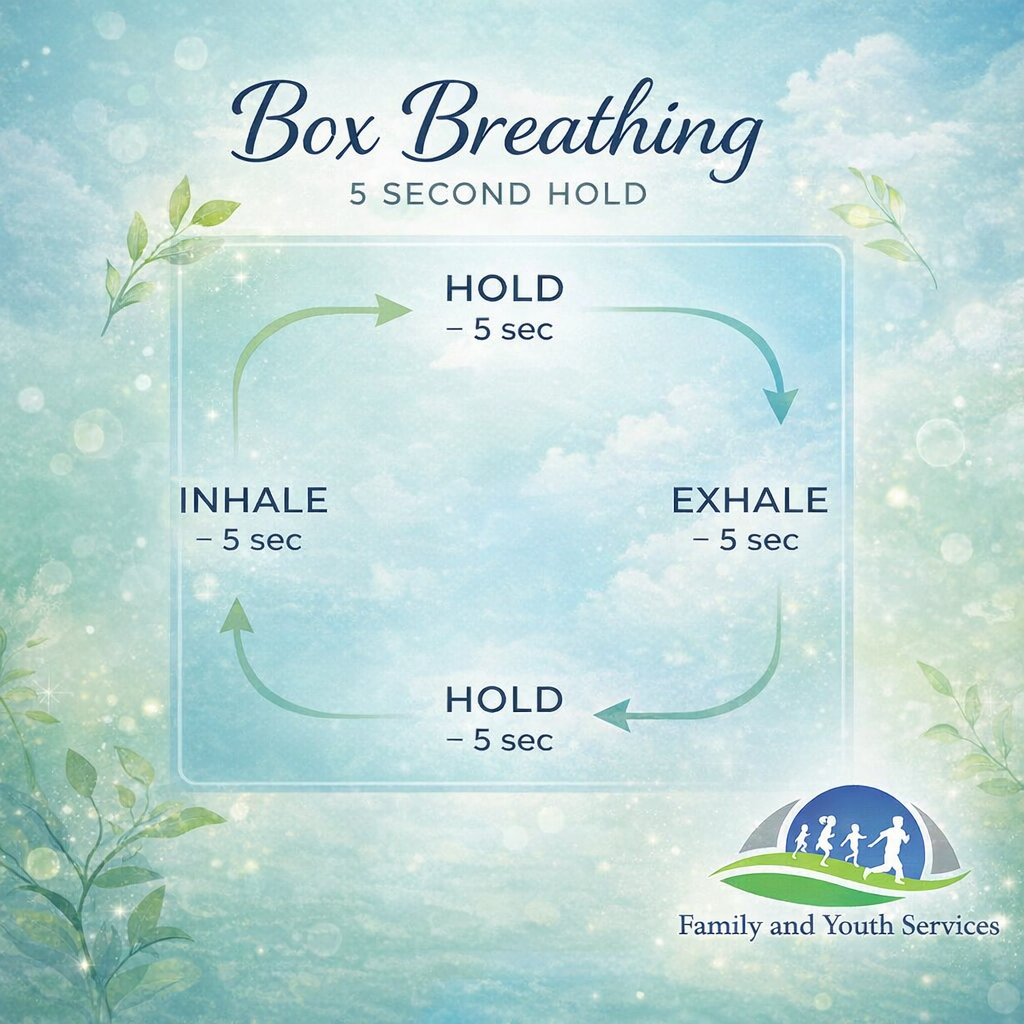
Box breathing is a slow breathing technique that follows four equal steps. Each step lasts the same amount of time, creating a pattern similar to the four sides of a square or box.
The basic pattern is:
Inhale slowly for 5 seconds
Hold your breath for 5 seconds
Exhale slowly for 5 seconds
Hold your breath again for 5 seconds
After completing the four steps, repeat the cycle several times.
Practicing this technique for just a few minutes can help your body relax and reduce feelings of anxiety.
Why Box Breathing Helps Reduce Anxiety
When someone experiences anxiety, the body's fight-or-flight response becomes activated. This response can cause faster breathing, muscle tension, and increased heart rate.
Slow breathing techniques like box breathing help activate the parasympathetic nervous system, which is responsible for calming the body.
Benefits of box breathing may include:
Slowing the heart rate
Reducing physical symptoms of anxiety
Improving focus and mental clarity
Helping the body return to a calm state
Increasing emotional regulation
By focusing on breathing and counting, box breathing also shifts attention away from anxious thoughts.
How to Practice Box Breathing
You can practice box breathing almost anywhere. It can be helpful during stressful moments or as part of a daily relaxation routine.
Follow these steps:
Sit comfortably with your back straight or lie down.
Slowly inhale through your nose for 5 seconds.
Hold your breath for 5 seconds.
Exhale slowly through your mouth for 5 seconds.
Hold again for 5 seconds.
Repeat this cycle for 4–6 rounds or longer.
Using a visual guide, like the box breathing image above, can help you stay focused on the rhythm.
When to Use Box Breathing
Box breathing can be useful in many everyday situations, including:
During moments of anxiety or panic
Before a stressful meeting or presentation
When feeling overwhelmed at school or work
Before bedtime to help the body relax
During mindfulness or meditation practice
Many people find that practicing regularly helps them use the technique more easily during stressful situations.
Box Breathing for Children and Teens
Box breathing is also an excellent tool for children and teenagers learning to manage stress or anxiety. Because the technique is simple and structured, it can help young people develop better emotional regulation skills.
Parents, teachers, and therapists can teach children to imagine tracing a square with their breath, making the exercise more engaging and easier to remember.
When to Seek Support for Anxiety
Breathing exercises are helpful tools, but they are just one part of managing anxiety. If anxiety is interfering with daily life, relationships, school, or work, professional support can make a meaningful difference.
At Family and Youth Services, our therapists work with children, teens, and adults to develop practical coping strategies for anxiety, stress, and emotional challenges.
Learning skills like box breathing can be an important first step toward feeling calmer and more in control.
Final Thoughts
Box breathing is a simple, powerful technique that can help calm the body and mind during stressful moments. With regular practice, it can become a valuable strategy for managing anxiety and improving overall well-being.
Sometimes, the first step toward feeling better is simply taking a slow, steady breath.